
Carbon monoxide (CO) is a highly toxic, odorless gas requiring abatement from industrial emissions, automotive exhaust, compressed breathing air, and fuel cell feed streams. Platinum (Pt) and palladium (Pd) based catalysts represent the gold standard for CO oxidation due to their exceptional activity, thermal stability, and resistance to humid environments. Unlike base metal catalysts (hopcalite, copper-manganese oxides), which deactivate rapidly in moist conditions or at elevated temperatures, Pt/Pd catalysts maintain >99% CO conversion across a wide operating window (-20°C to 300°C) with service lives exceeding 10,000 hours. The noble metal’s ability to adsorb and activate both CO and O₂ simultaneously—combined with support effects from reducible oxides like ceria or titania—enables the low-temperature Langmuir-Hinshelwood mechanism that defines their superior performance.
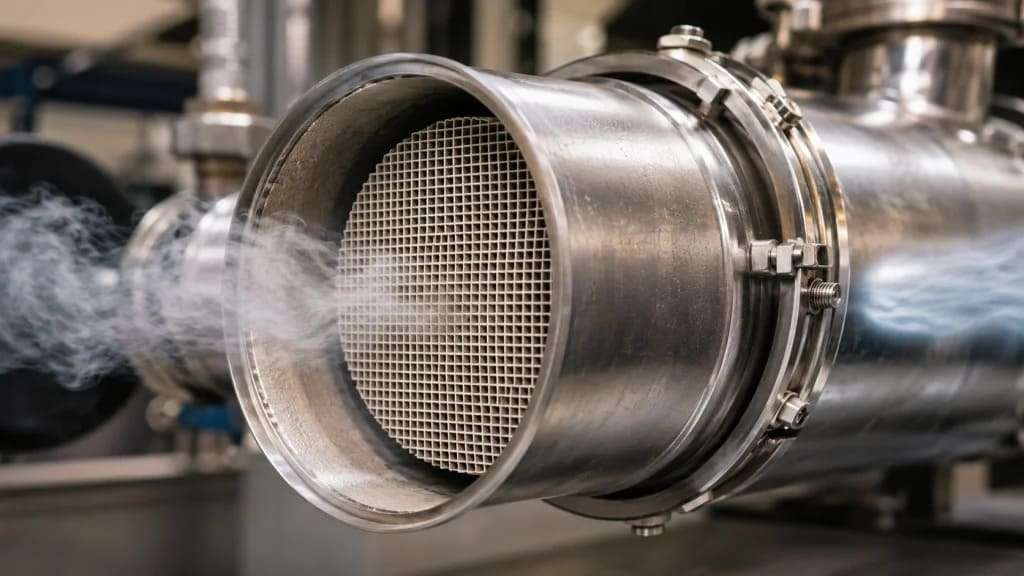

Platinum and palladium are the two dominant noble metals for CO oxidation, each offering distinct advantages:
Property | Platinum (Pt) | Palladium (Pd) |
Light-off temperature (T50) | 120-160°C | 150-200°C |
Maximum operating temperature | 800°C+ (sintering above 700°C) | 900°C+ (more thermally stable) |
Sulfur tolerance | Moderate (reversible poisoning) | Moderate (reversible) |
Water vapor tolerance | Excellent | Excellent |
Cost (relative) | High (baseline) | 40-60% of Pt |
Primary application | Low-temperature, high-activity requirements | High-temperature, durability-focused |
Pt:Pd alloy synergy – Bimetallic Pt-Pd catalysts (typically 1:1 to 3:1 Pt:Pd molar ratios) exhibit enhanced activity compared to either metal alone. The alloying effect modifies electronic structure, creating electron-rich Pd sites and electron-deficient Pt sites that optimize CO and O₂ binding energies. This reduces the activation energy for CO oxidation from approximately 80-100 kJ/mol on monometallic catalysts to 50-70 kJ/mol on optimized Pt-Pd alloys.
Promoter and stabilizer addition – Transition metal promoters (Fe, Co, Ni) and rare earth oxides (CeO₂, La₂O₃) further enhance activity. Cobalt doping of Pt-Pd/CeO₂-ZrO₂ catalysts, for example, increases CO conversion from 45% to 99% at 130°C. The addition of cobalt and nickel modifies the electron density around noble metal atoms, creating a synergetic catalytic environment that facilitates O-O bond breaking and CO adsorption.
The catalytic support—typically a high-surface-area oxide—determines noble metal dispersion, thermal stability, and metal-support interactions.
γ-alumina (γ-Al₂O₃) – industry standard – With surface areas of 150-300 m²/g and excellent textural properties, γ-alumina is the most widely used support. However, bare alumina sinters above 1,000°C and can react with noble metals under lean conditions. Lanthanum (La) or barium (Ba) stabilization (2-5 wt%) maintains surface area and prevents phase transformation to low-area α-Al₂O₃.
Ceria-zirconia (CeO₂-ZrO₂, CZ) – oxygen storage and metal anchoring – Ceria’s ability to cycle between Ce⁴⁺ and Ce³⁺ provides oxygen storage capacity (OSC) that buffers transient CO spikes. Zirconia incorporation (20-50 mol%) enhances thermal stability while maintaining OSC. The strong metal-support interaction (SMSI) between Pt/Pd and ceria—where reduced ceria partially covers noble metal particles—modifies catalytic properties and can either enhance or suppress activity depending on preparation conditions.
Composite supports (Al₂O₃-CeO₂-ZrO₂) – Commercial CO removal catalysts typically use layered or mixed oxide supports combining alumina’s high surface area with ceria’s redox properties and OSC. The optimal CeO₂ content is approximately 20-30 wt%, balancing OSC against surface area loss.
Support coating on honeycomb (washcoat) – For structured catalysts, the support is applied as a washcoat to ceramic (cordierite) or metallic honeycomb substrates. The washcoat slurry (30-45% solids, particle size D90 5-15 µm) is dip-coated and blown to achieve uniform layer thickness (20-50 µm). Palygorskite clay pre-coating increases washcoat adhesion and active site loading.
Impregnation (most common, industrial scale) – PGM salts (H₂PtCl₆ for Pt, Pd(NO₃)₂ for Pd) dissolved in water or organic solvent are added to the support powder or pre-washcoated honeycomb. After drying (80-120°C) and calcination (400-600°C), salts decompose to metallic nanoparticles (1-10 nm diameter). Control parameters: metal loading (0.1-3 wt% total PGM), impregnation volume (incipient wetness vs. excess solution), and calcination atmosphere (air, inert, or reducing).
Co-precipitation (high dispersion) – Support precursors (Al, Ce, Zr nitrates) and noble metal salts are co-precipitated by adding base, yielding intimate metal-support contact and very high noble metal dispersion (>80%). Preferred for laboratory-scale high-activity catalysts but less common industrially due to complex waste handling.
Flame spray pyrolysis (FSP) – advanced nanoparticle synthesis – FSP produces noble metal nanoparticles directly deposited on oxide supports with controlled particle size (2-5 nm) and narrow distribution. The one-step, continuous process eliminates separate calcination and reduces noble metal losses.
Particle size–activity relationship – For CO oxidation, the optimal Pt particle size is 2-4 nm. Smaller particles (<2 nm) may become inactive due to strong CO poisoning (CO binds too tightly). Larger particles (>6 nm) have fewer edge/corner sites and lower mass-specific activity.
Langmuir-Hinshelwood (L-H) mechanism (dominant at low temperatures, <200°C) :
Mars-van Krevelen (MvK) mechanism (significant on reducible supports like ceria, >200°C) :
The dominant mechanism depends on temperature: L-H controls activity at low temperatures (cold start, ambient conditions), while MvK becomes important at elevated temperatures (steady-state operation).
Kinetic rate expression (simplified power law) : Rate = k × P_CO^a × P_O₂^b. For Pt catalysts, a ≈ 0 to -1 (CO inhibition at high coverage), b ≈ 0.5 to 1. The negative CO order at high CO partial pressures reflects CO poisoning—excess CO blocks oxygen adsorption sites, reducing reaction rate. This is why CO oxidation catalysts are most efficient at moderate CO concentrations (100-1,000 ppm) rather than very high levels (>10,000 ppm).
Deactivation Mode | Mechanism | Reversibility | Prevention |
CO poisoning | Excess CO blocks sites (self-inhibition) | Fully reversible (increased temperature or O₂) | Maintain O₂:CO ratio >1 |
Sintering | Particle growth at high temperature (>700°C) | Irreversible | Stabilizing dopants (La, Ba); optimize particle size |
Sulfur poisoning | SO₂ forms PtS/PdS sulfides | Partially reversible (H₂ reduction at 400°C+) | Low-sulfur fuel; upstream desulfurization |
Chlorine/chloride | Pt-Cl or Pd-Cl surface complexes | Reversible (high-temperature O₂/steam treatment) | Avoid chloride-containing precursors |
Carbon deposition | Graphitic carbon covers active sites | Reversible (O₂/air burn-off at 400°C) | Maintain O₂:CO ratio >1 |
Support phase transformation | γ-Al₂O₃ → α-Al₂O₃ (surface area loss) | Irreversible | La/Ba stabilization; avoid sustained >1,000°C |
Water vapor effects – Unlike base metal catalysts, Pt and Pd are highly tolerant to water vapor. In fact, trace moisture (1-5 vol%) can enhance activity by facilitating surface hydroxylation and promoting the water-gas shift reaction (CO + H₂O → CO₂ + H₂). However, very high humidity (>20 vol%) with concurrent low temperature may cause competitive adsorption.
Sulfur regeneration – Sulfated Pt/Pd catalysts can be partially regenerated by reduction in H₂ at 300-400°C, converting PtS back to metallic Pt. Complete regeneration requires high-temperature oxidation-reduction cycling, which may accelerate sintering.
Ceramic honeycomb (cordierite) – The dominant platform for high-flow applications (automotive, industrial flue gas). Substrate specifications: 200-600 cpsi, 4-12 mil wall thickness, open frontal area >80%. Washcoat loading: 50-150 g/L support + 0.1-3 g/L PGM. Gas hourly space velocity (GHSV): 10,000-100,000 hr⁻¹.
Metallic honeycomb – FeCrAlloy (Fe-Cr-Al) foil substrates with higher cell densities (up to 1,200 cpsi) and thinner walls (2-3 mil). Superior thermal conductivity (≈15 W/m•K vs. 2 W/m•K for cordierite) enables faster light-off. Used in close-coupled automotive applications and compact industrial units.
Pellet/granular form – Spherical or cylindrical pellets (2-5 mm diameter) packed in fixed-bed reactors. Higher pressure drop than honeycomb but simpler to replace in small-scale systems (breathing air purifiers, laboratory gas cleaners). Pellet bulk density: 0.6-0.9 g/mL.
Supported metal mesh – Pt/Pd coated on expanded metal or wire mesh (stainless steel or FeCrAlloy). Low pressure drop, flexible geometry, and good thermal conductivity. Suitable for retrofitting into existing ductwork.
Typical performance (Pt-Pd/Al₂O₃-CeO₂ on cordierite, 400 cpsi, 0.5 g/L PGM, GHSV 30,000 hr⁻¹) :
Temperature | CO Conversion | Light-off (T50) | Pressure Drop |
100°C | 40-60% | – | <5 kPa |
150°C | 85-95% | 130-160°C | <5 kPa |
200°C | 99%+ | – | <5 kPa |
250°C | 99%+ | – | <5 kPa |
Commercial product specifications :
Parameter | Range |
CO conversion efficiency | ≥99% at operating temperature |
Pressure drop (honeycomb) | 2-8 kPa at face velocity 1-3 m/s |
Operating temperature | -20°C to 300°C (continuous); up to 600°C intermittent |
Service life | 3-10 years depending on conditions |
Sulfur tolerance | Up to 50 ppm SO₂ with reversible deactivation |
Humidity tolerance | 0-100% RH (no permanent damage) |
Accelerated aging tests – Catalysts are aged in ovens (700-900°C for 4-100 hours) or on engine benches to simulate 10,000-100,000 hours of real operation. Performance after aging must remain within 10-20% of fresh catalyst.
Automotive exhaust (three-way catalyst component) – Pt and Pd are the primary CO oxidation components in gasoline TWC. The close-coupled position (directly after exhaust manifold) requires extreme thermal durability (950°C+ peaks). Pt:Pd ratios range from 1:1 to 1:5 depending on application.
Industrial flue gas treatment – Steel mills, cement kilns, chemical plants, and waste incinerators emit CO that must be abated to meet air quality standards. Honeycomb Pt/Pd catalysts operate at 150-250°C, typically positioned after particulate control but before SCR for NOx removal.
Compressed breathing air (CO removal) – Firefighter SCBA and industrial breathing air systems use Pt/Pd catalysts at ambient temperature to reduce trace CO (<10 ppm inlet) to <1 ppm outlet. The honeycomb or pellet format must be highly resistant to humidity from compressed air.
Fuel cell feed gas purification (PROX) – Polymer electrolyte membrane fuel cells (PEMFC) require CO concentration below 10 ppm to avoid poisoning the Pt anode. Preferential oxidation (PROX) catalysts—typically Ru/Pt or Pt/Fe on Al₂O₃—selectively oxidize CO to CO₂ in H₂-rich reformate streams, operating at 80-150°C with >99% CO removal.
CO gas detector calibration and zero air generation – High-purity zero air for instrument calibration is produced by passing compressed air through a Pt/Pd catalyst at 300-400°C, oxidizing all CO and hydrocarbons to <0.1 ppm.
Enclosed spaces (submarines, space stations) – Pt/Pd catalytic oxidizers remove CO from recirculated air in submarines (where diesel engines operate submerged) and spacecraft cabins. Long life (5-10 years) without regeneration is critical.
We engineer platinum and palladium CO oxidation catalysts across the full application spectrum. Whether you require a high-activity, low-light-off Pt-Pd/Al₂O₃ honeycomb for cold-start automotive emission control, a thermally durable Pd/CeO₂-ZrO₂ monolithic catalyst for industrial flue gas at 250°C with 10,000+ hour service life, a poison-resistant Pt-Pd/FeCrAlloy mesh for retrofitting into existing ductwork, or a high-selectivity Pt/Fe/γ-Al₂O₃ PROX catalyst for PEM fuel cell feed purification, our team tailors the metal composition (Pt:Pd ratio, with or without transition metal promoters), support formulation (Al₂O₃, CeO₂-ZrO₂, composite, or stabilized), noble metal loading (0.1-3 wt%), particle size distribution (2-10 nm), synthesis route (impregnation, co-precipitation, flame spray), substrate architecture (honeycomb cell density, pellet size, mesh geometry), and washcoat characteristics (loading, adhesion, porosity) to your specific CO concentration, flow rate, temperature window, poison exposure, and durability requirement.
Partner with us to define your path to compliance – platinum-palladium precision.
Single-atom catalysts (SACs) – Atomically dispersed Pt and Pd on ceria or graphene supports achieve near-100% metal utilization, reducing noble metal loading by 80-90% while maintaining or exceeding conventional nanoparticle activity. Thermal stability remains a challenge (single atoms sinter rapidly above 300°C).
Core-shell nanoparticles – Pd@Pt or Pt@Pd core-shell structures place the less expensive metal in the core and the active metal on the surface, reducing PGM content by 40-60% while maintaining activity. Controlled synthesis yields uniform 5-10 nm particles with complete shell coverage.
High-entropy alloy catalysts – Pt-Pd-Fe-Co-Ni multi-component nanoparticles exploit synergistic electronic effects for enhanced CO oxidation activity and poison resistance. Early results show T50 reductions of 20-30°C compared to bimetallic Pt-Pd.
Machine learning-optimized formulations – High-throughput synthesis and testing (hundreds of catalyst variations per day) combined with machine learning models predict optimal Pt:Pd ratio, support composition, promoter loading, and synthesis conditions for any target operating window. First commercial ML-optimized catalysts expected 2027-2028.
Electrically heated catalysts (e-catalyst) – Pt/Pd washcoats formulated with conductive additives (carbon nanotubes, graphene, conductive ceramics) enable resistive heating directly through the catalytic layer. Achieves light-off (200°C+) within 1-2 seconds of cold start, eliminating the cold-start emissions window – the single largest remaining CO source in automotive applications.
Platinum and palladium CO removal catalysts are not merely active metals on a support—they are precision-engineered nanomaterials optimized through decades of research. A well-designed Pt/Pd catalyst achieves >99% CO conversion across temperature windows from ambient to 300°C, resists deactivation from sulfur and thermal aging, and provides 3-10 years of reliable service in demanding environments. Whether you are reducing cold-start emissions from a gasoline engine, purifying breathing air for firefighters, treating industrial flue gas, or protecting a fuel cell anode, Pt/Pd catalysts define the performance benchmark—and we are ready to engineer your solution.