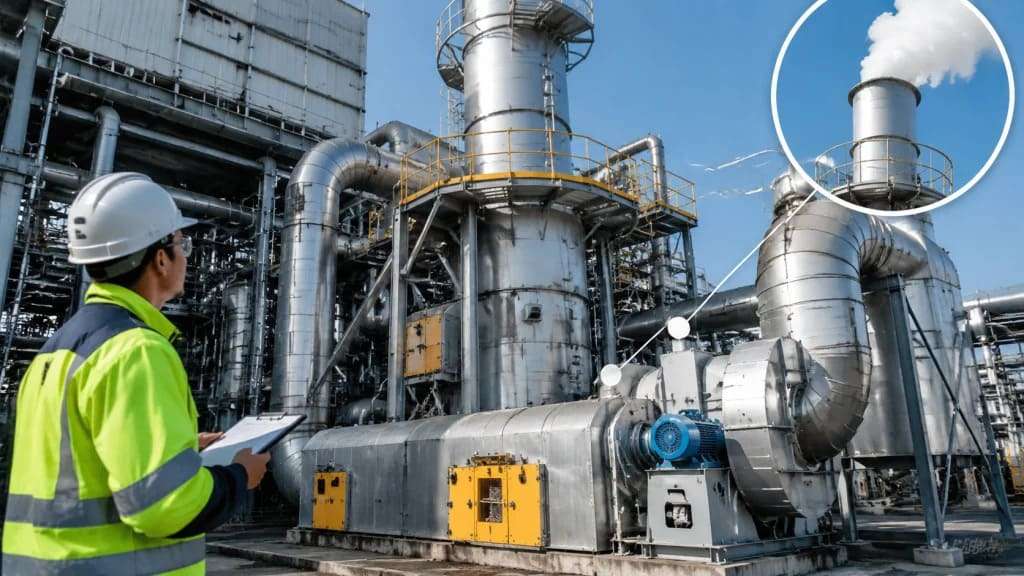
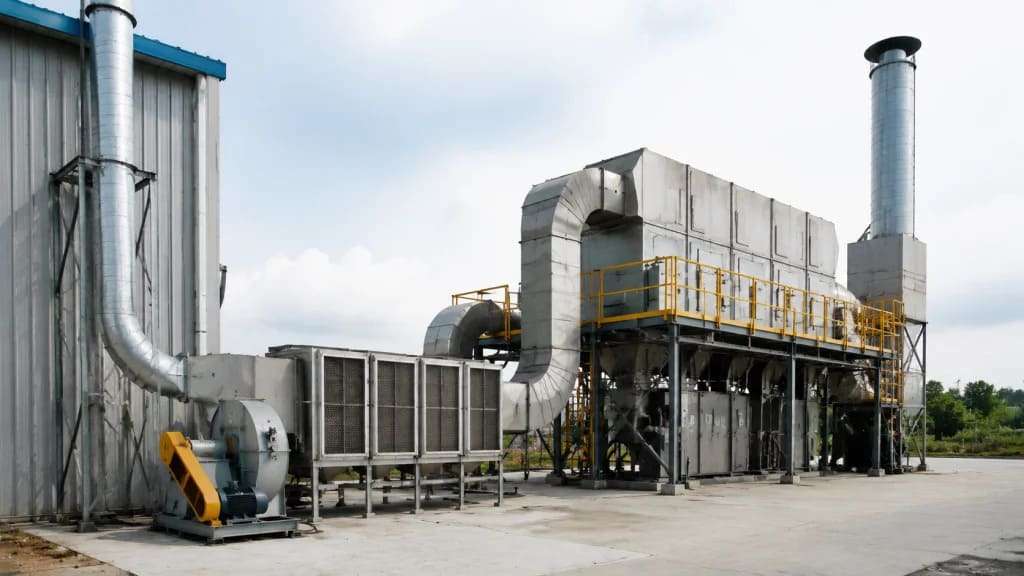
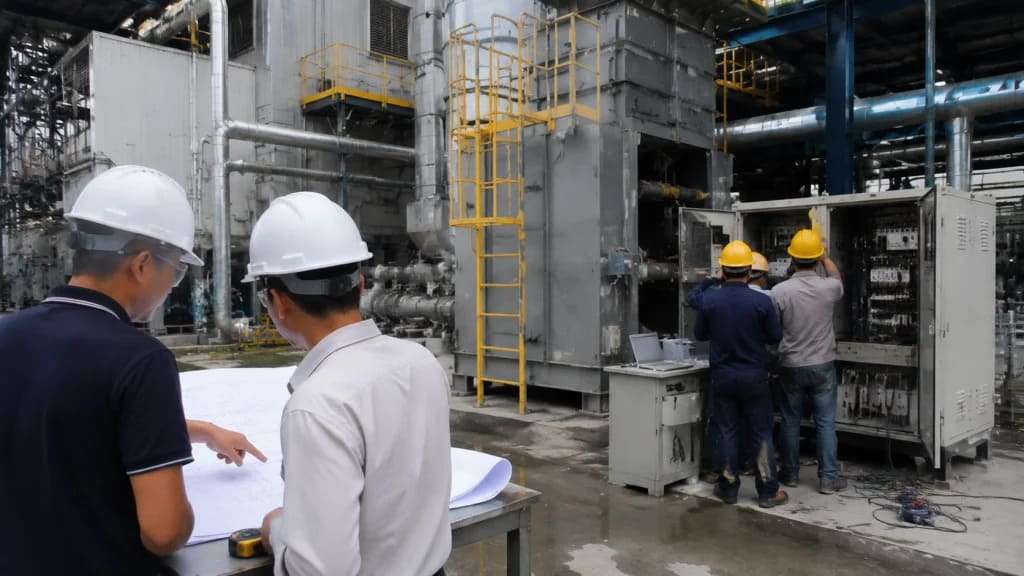
Volatile organic compounds (VOCs) are emitted from printing, coating, painting, chemical manufacturing, pharmaceutical production, and wastewater treatment operations. VOCs contribute to smog, pose health risks, and are strictly regulated worldwide (EU Industrial Emissions Directive, EPA 40 CFR Part 63, China GB 37822). We provide complete, validated VOC treatment solutions tailored to your flow rate, concentration, and compound composition.
Industrial VOC streams vary in flow rate (100–500,000+ m³/hr), concentration (10–10,000+ ppm), temperature (ambient to 200°C+), humidity, and compound mix (aliphatics, aromatics, chlorinated, oxygenated). No single technology fits all. Our systems integrate destruction (oxidation) or recovery (adsorption) technologies into reliable, energy-efficient packages.
Destruction route (most common – high efficiency):
VOC-laden air → Pre-filter → Fan → Oxidizer (RTO/CO/RCO) → Stack
Concentration + destruction route (large flow, low concentration):
VOC-laden air → Rotary concentrator → Small oxidizer → Clean air to stack
Recovery route (high-value solvents):
VOC-laden air → Carbon adsorber (steam or N₂ regeneration) → Condenser → Recovered solvent → Dry gas to stack
Large flow (10,000–500,000+ m³/hr), low-to-medium VOC (200–2,000 ppm). Ceramic media beds (95–97% thermal efficiency) preheat incoming gas. Operating temp: 800–900°C. Destruction efficiency: 95–99%+. Fuel consumption very low (autothermal at 300–400 ppm). High capital cost, moderate pressure drop (20–40 mbar).
Medium flow (1,000–50,000 m³/hr), low-to-medium VOC (500–2,000 ppm). Precious metal catalyst (Pt/Pd) on honeycomb at 300–450°C. Destruction efficiency: 95–99%+. Moderate fuel consumption (25–40% of RTO). Lower NOx formation than RTO.
Hybrid of RTO and CO. Ceramic media (95% thermal efficiency) + catalyst (350–500°C). Fuel consumption 30–50% lower than RTO. Suitable for flow 5,000–100,000 m³/hr, concentration 300–1,500 ppm.
Very large flow (50,000–500,000+ m³/hr), very low concentration (10–200 ppm). Zeolite rotor adsorbs VOCs from main stream. Small hot air slip stream desorbs VOCs (180–220°C) to small oxidizer. Total energy 70–90% lower than direct oxidation.
High-value solvents (toluene, ethyl acetate, MEK, acetone). Activated carbon fixed beds adsorb VOCs. Steam or hot nitrogen regenerates carbon; condensed vapors yield recovered solvent and water. Recovery efficiency: 90–99%. ROI: 1–3 years. Produces wastewater (steam regeneration).
Technology | Typical Flow (m³/hr) | Inlet VOC (ppm) | Destruction/Recovery Efficiency | Operating Temp (°C) | Relative Energy |
RTO | 10k–500k | 200–2,000 | 95–99% | 800–900 | Low (autothermal) |
CO | 1k–50k | 500–2,000 | 95–99% | 300–450 | Medium |
RCO | 5k–100k | 300–1,500 | 95–99% | 350–500 | Low–medium |
Concentrator + Oxidizer | 50k–500k+ | 10–200 | 90–99% | 180–220 (rotor) | Very low |
Carbon Adsorption (Recovery) | 1k–100k | 500–5,000 | 90–99% | Ambient | Low (fan only) |
Industry / Process | VOC Compounds | Typical Flow (m³/hr) | Concentration (ppm) | Recommended Technology |
Printing (rotogravure, flexo) | Toluene, ethyl acetate, IPA | 20k–150k | 500–2,000 | RTO or carbon recovery |
Coating / Laminating | MEK, acetone, toluene | 10k–100k | 300–1,500 | RTO or RCO |
Paint Spray Booth | Xylene, butyl acetate, aromatics | 50k–500k+ | 10–100 | Concentrator + RTO/CO |
Chemical / Pharma | Various | 1k–50k | 100–10,000 | RTO or carbon recovery |
Semiconductor / Electronics | IPA, PGMEA, acetone | 10k–100k | 10–200 | Concentrator + CO |
Wastewater Treatment | H₂S, VOCs (odor) | 1k–100k | 1–200 | Biofilter or carbon |
Flexographic Printing | Ethanol, ethyl acetate, propyl acetate | 10k–80k | 300–1,500 | RTO or solvent recovery |
Can Manufacturing | Aromatics, ketones, esters | 50k–300k | 200–1,000 | RTO |
Wood Products (pressing) | Formaldehyde, methanol | 20k–150k | 50–500 | RTO or biofilter |
Compliant with EPA 40 CFR Part 63 Subpart KK, EU IED, China GB 37822, and local ozone reduction targets.
RTO/CO/RCO: 95–99%+, 99%+ achievable. Carbon adsorption: 90–99%.
RTO: 95–97% thermal efficiency. RCO: catalyst lowers temperature 200–300°C vs. RTO. Concentrator reduces oxidized volume 90–95%. Heat recovery options available.
Burners optimized for <20–50 ppm NOx. CO/RCO inherently lower NOx due to lower operating temperature (300–450°C vs. 800–900°C for RTO).
Stainless steel (304/316) for corrosive VOCs; carbon steel for non-corrosive. Acid-resistant brick and ceramic media.
Flame arrestors, explosion venting, purge cycles, continuous LEL monitoring, automatic dilution or bypass.
Service Area | Description |
Application assessment | VOC speciation (GC-MS), flow measurement, concentration profiling, regulatory review |
Technology selection | RTO, CO, RCO, concentrator + oxidizer, or carbon recovery |
System design | Ductwork, pre-filtration, fan (IE3/IE4, VFD), oxidizer sizing, heat recovery, stack |
Controls integration | PLC/HMI, temperature control, LEL monitoring, data logging, remote access |
Installation & commissioning | Civil works, equipment erection, start-up, performance testing, training |
Ongoing support | Catalyst replacement, ceramic media replenishment, carbon change-out, preventive maintenance, emission testing |

Hundreds of systems in operation across printing, coating, chemical, pharma, and semiconductor industries.
Process, mechanical, electrical, and controls under one roof. CFD modeling ensures uniform distribution for RTO/RCO efficiency
Dedicated teams understand specific VOCs, batch vs. continuous production, and solvent value economics.
Optimized ceramic media, catalyst loading, and heat recovery. Energy-efficient fan and burner designs. Modular systems for expansion.
From rotogravure presses needing solvent recovery to large paint booths requiring ultra-low energy concentrator + RTO, and chemical plants with challenging chlorinated VOCs, our VOC treatment solutions deliver compliance, efficiency, and value. Partner with us to engineer your path to cleaner air.