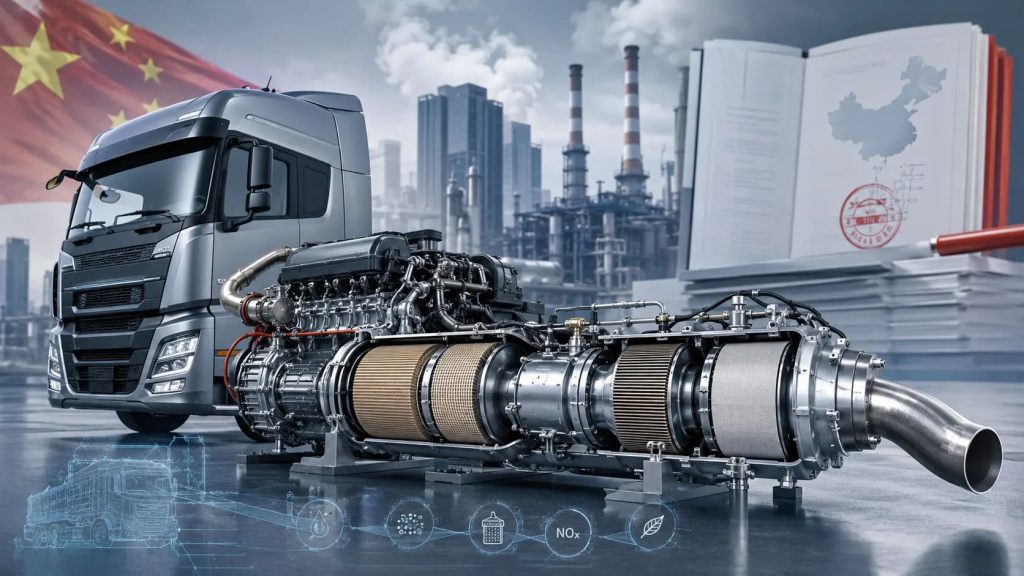
On August 15, 2026, the Ecological Environment Code of the People’s Republic of China officially came into effect. This is not simply a new “emissions standard” to be met. Instead, it represents a fundamental systemization of air pollution control, mobile source management, emission control systems, fuel and additives, production and sales, in-use maintenance, recalls, testing supervision, and legal responsibilities.
For gasoline and diesel exhaust aftertreatment companies, this is a watershed moment. My overall assessment is:
The Ecological Environment Code establishes a comprehensive regulatory framework. Articles 221–237 create a complete chain of control over emissions from vehicles, engines, and non-road mobile machinery.
For many years, the business logic for aftertreatment suppliers was straightforward:
Engine manufacturer → OEM purchases an aftertreatment system → Factory testing pass → Supply chain ends
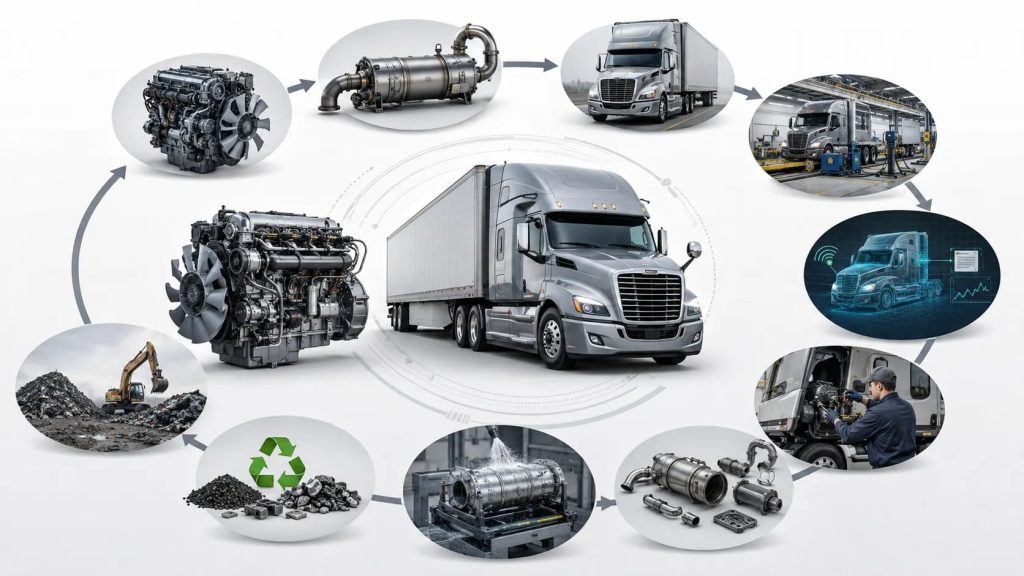
The Code fundamentally changes this paradigm. Going forward, the value chain looks more like:
Engine → Aftertreatment System → Vehicle/Machine → Factory Testing → In-Use Monitoring → Maintenance & Replacement → Recall → Remanufacturing → Scrappage
In other words, the life cycle of aftertreatment products has been significantly extended.
The Code creates a legal obligation for aftertreatment systems to perform throughout the vehicle’s life. This means our products must meet stricter durability requirements and withstand real-world operating conditions, not just laboratory testing.
OEMs will demand more sophisticated aftertreatment solutions to ensure their products survive the expanded compliance chain. Simple, low-cost catalysts will give way to integrated, intelligent systems.
The expanded life cycle creates demand for higher-quality substrates, more advanced washcoat formulations, and durable catalyst coatings that maintain performance over longer periods.
With foreign aftertreatment suppliers facing the same regulatory pressures, domestic suppliers who can deliver compliant, cost-effective solutions have a clear opportunity to capture market share.
The Code will drive a fundamental transformation in our industry. Aftertreatment companies will need to evolve from component suppliers to emission control system solution providers.
This means offering not just catalysts, but:
“The competent departments of industry and information technology, transport, market regulation, and customs shall cooperate accordingly.”
This creates a closed-loop regulatory system where aftertreatment performance is tracked across the entire vehicle life cycle. Suppliers can expect to be held accountable for system performance far beyond the factory gate.
“Prohibited acts include: temporarily replacing, tampering with, disabling, or falsifying emission control systems…”
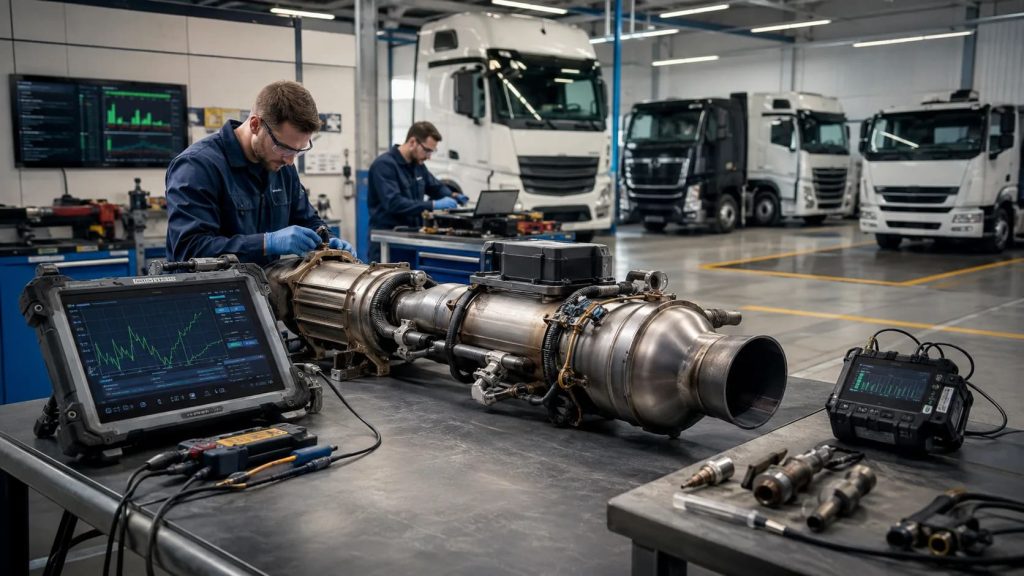
This provision makes it a legal offense to interfere with aftertreatment systems. It also creates demand for anti-tampering technologies, secure system designs, and diagnostic tools that can detect and report unauthorized modifications.
“In-use heavy vehicles, vessels, and non-road mobile machinery…that fail to meet emission standards shall be retrofitted with compliant emission control systems.”
This creates a significant retrofit market, especially for older vehicles and equipment not originally equipped with modern aftertreatment. It is an opportunity for suppliers who can offer practical, cost-effective retrofit solutions.
“Additives must not damage the effectiveness and durability of emission control systems.”
This provision affects the lubricant, fuel, and DEF sectors, requiring them to demonstrate that their products do not harm aftertreatment systems. It also empowers aftertreatment suppliers to challenge substandard consumables that reduce system performance.
Assess whether current products meet extended life cycle requirements.
Move beyond component supply to provide integrated solutions.
Build capabilities in OBD, remote monitoring, and predictive maintenance.
Develop compliant retrofit packages for older vehicles and equipment.
Collaborate on system-level solutions that span the vehicle’s full life cycle.
Work with OEMs, fleet operators, and regulators to build trust.
The Ecological Environment Code of China is not just another emissions standard. It is a fundamental restructuring of the regulatory landscape that will reshape the aftertreatment industry. Suppliers who recognize the shift from “emission results” to “full life cycle” and adapt accordingly will thrive. Those who see it as merely another compliance hurdle risk being left behind.
The time to transform is now.